
Insulation Basics And Roofspaces
There are as many ways to insulate your property as there are ways to finish the external walls so an informed choice is necessary and seldom is the cheapest – in most walks of life – the right answer. As the photographs below will show, there are great risks of using the wrong material and having someone install it who doesn’t understand your building.
These basic steps will ensure that the timber roof structure is not sacrificed in our attempt to save a few quid in heat loss through ceilings:
- Using the correct insulation:
- Mineral Wool:
- Mineral wool is bad if you inhale it – I know as I regularly do so when surveying roof spaces – so if you are accessing the roofspace you will be faced with fibres floating around which you will breathe in. It also causes itching as the fibres penetrate your skin.
- Mineral wool, although it contains a lot of air gaps, is waterproof – it doesn’t absorb water. This sounds good until you consider that, if there is moisture in the atmosphere then it will condense on the surface of the insulation and may be absorbed by neighbouring timber and contribute to the increased risk of decay.
- Because mineral wool is impervious to moisture, when it is installed over timber which is at risk of increased moisture, it prevents moisture from evaporating from the timber and increases the risk of decay.
- Mineral wool can be compressed when accessing the space and doesn’t return to its shape so reduces its insulant qualities.
- Sheep Wool:
- Sheep Wool is natural – from sheep – although some also contain other fibres.
- Sheep Wool has natural fire retardant properties which don’t rely on adding chemicals.
- Sheep Wool doesn’t contain harmful fibres for you to breathe in.
- Sheep Wool doesn’t compress easily so will retain its shape and performance.
- Installing it correctly:
- Maintain good ventilation to the roofspace. The point of the exercise is to prevent heat loss from the rooms below, not to prevent airflow within the roofspace.
- Don’t block the eaves (roof/wall junction).
- Don’t stuff the insulation into every crevice as it becomes inefficient when compressed.
- Don’t install it where there is lath and plaster installed as this gap (most often at the chimney stack) is necessary for whole-house ventilation.
- Don’t prevent evaporation from potentially damp timber.
- Mineral wool insulation installed over damp timber will make it decay – fact. It prevents continual evaporation.
- Install it only over ceilings or over exposed room walls in roof space. Do not insulate the roof pitch unless you are using the roofspace as accommodation – this will cause very high moisture levels in the roofspace and cause sweating (condensation) and decay.
- The installation of insulation should be off-set by the installation of additional roof ventilation. This won’t impact on heat loss since it is the ceilings of the rooms below that are being insulated – not the roofspace.
- Modern ‘breathable’ roof membranes aren’t breathable enough in most cases and are designed and intended for modern (new build) houses, not older houses with potential higher ventilation needs.
- Maintain good ventilation to the roofspace. The point of the exercise is to prevent heat loss from the rooms below, not to prevent airflow within the roofspace.
There are other ways to insulated roofspaces – blown cellulose (recycled paper), wood wool to name only two, so some research is required to get the right product. If there is no risk of moisture and you don’t intend to access the roofspace – mineral wool might be the right choice for you – however this is seldom the case in older and traditional properties.
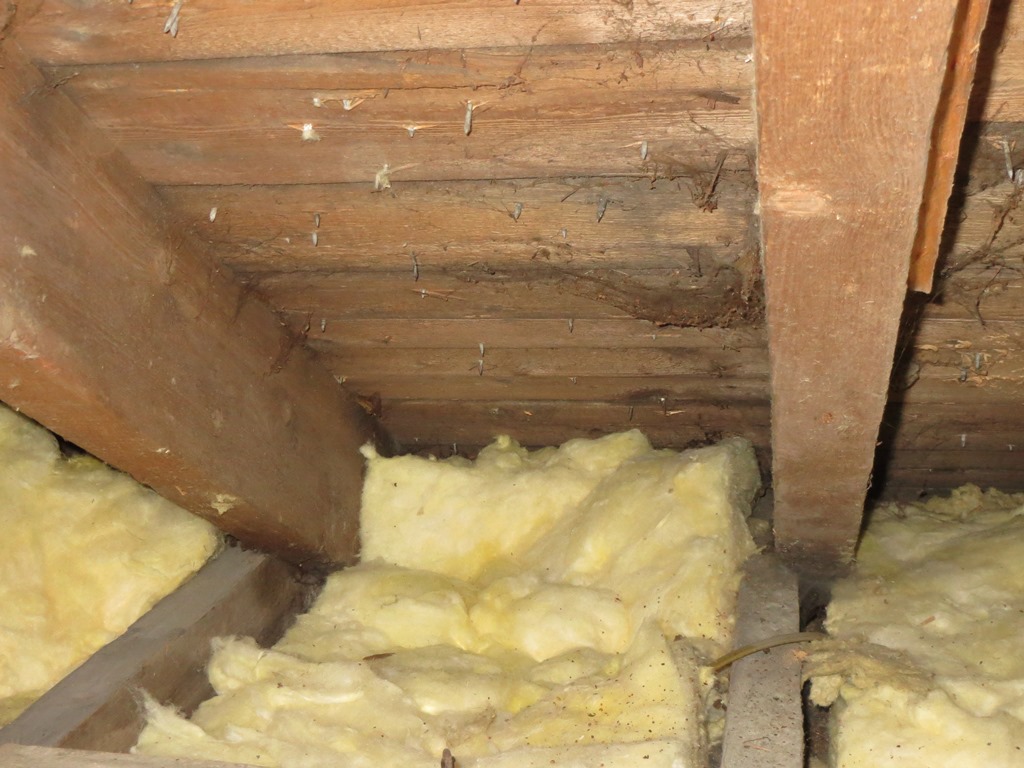
Blocking ventilation again
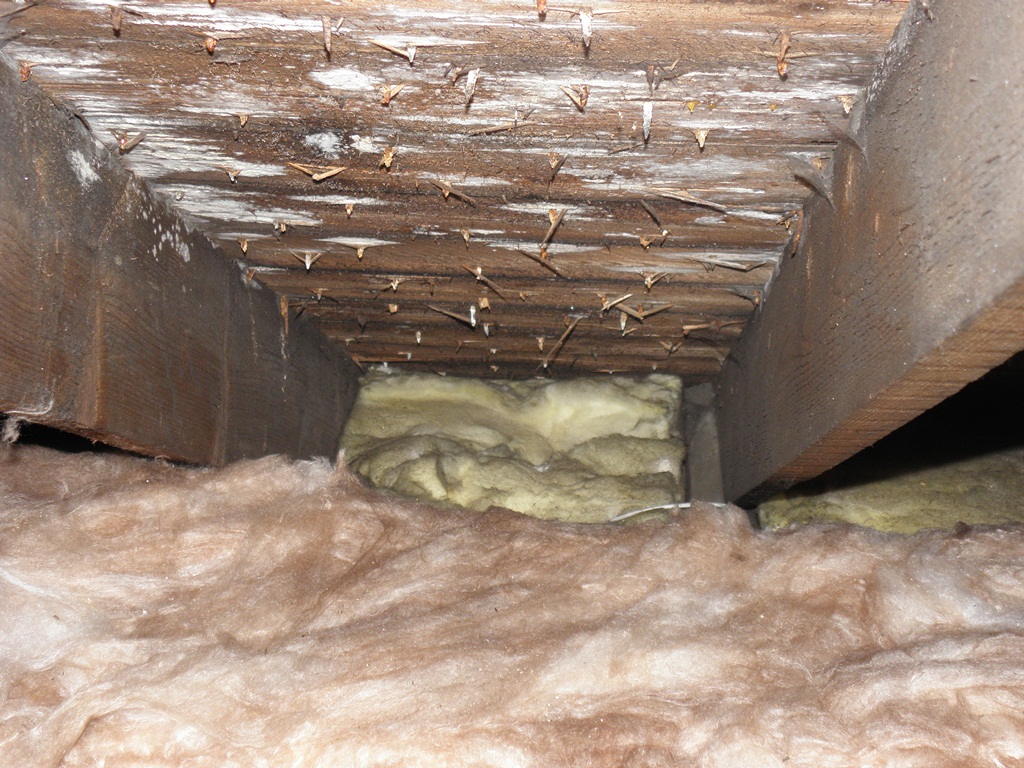
Blocking ventilation
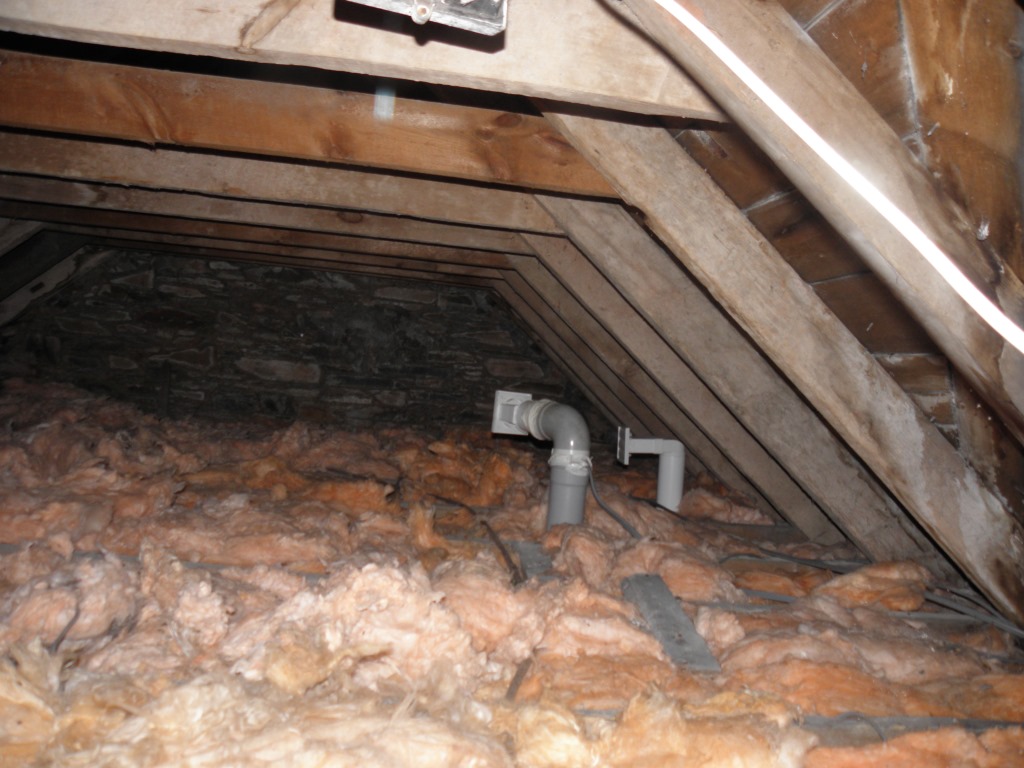
Dont extract bathrooms to the roofspace
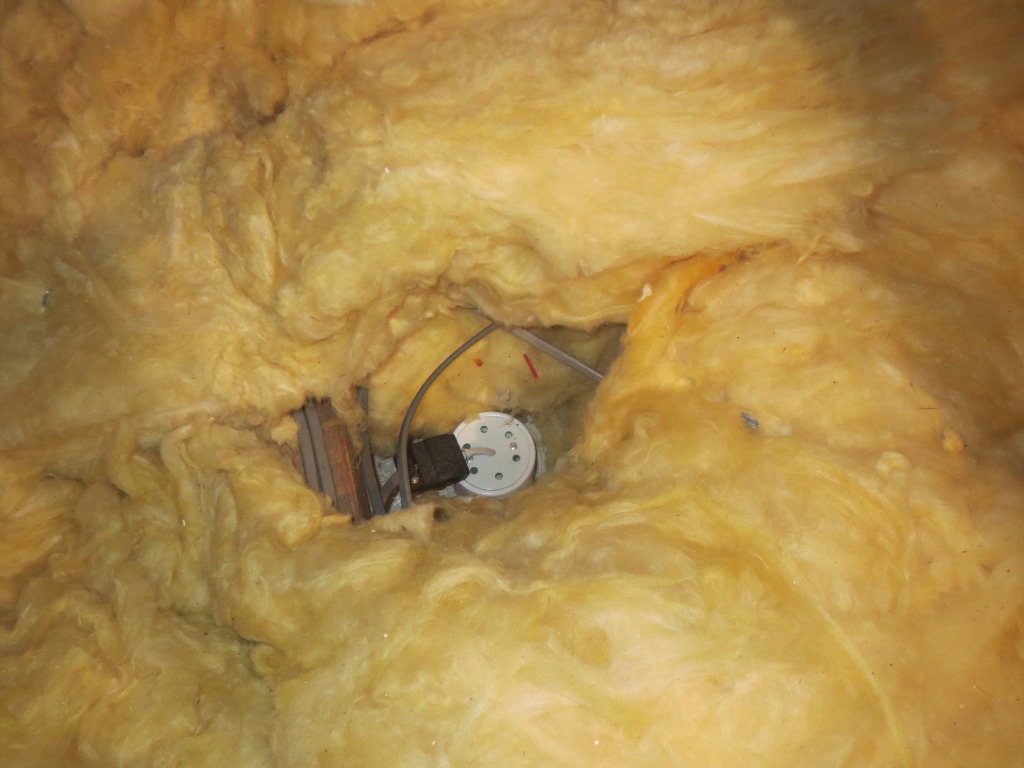
Heat resistent shrouds should be fitted over recessed light fittings
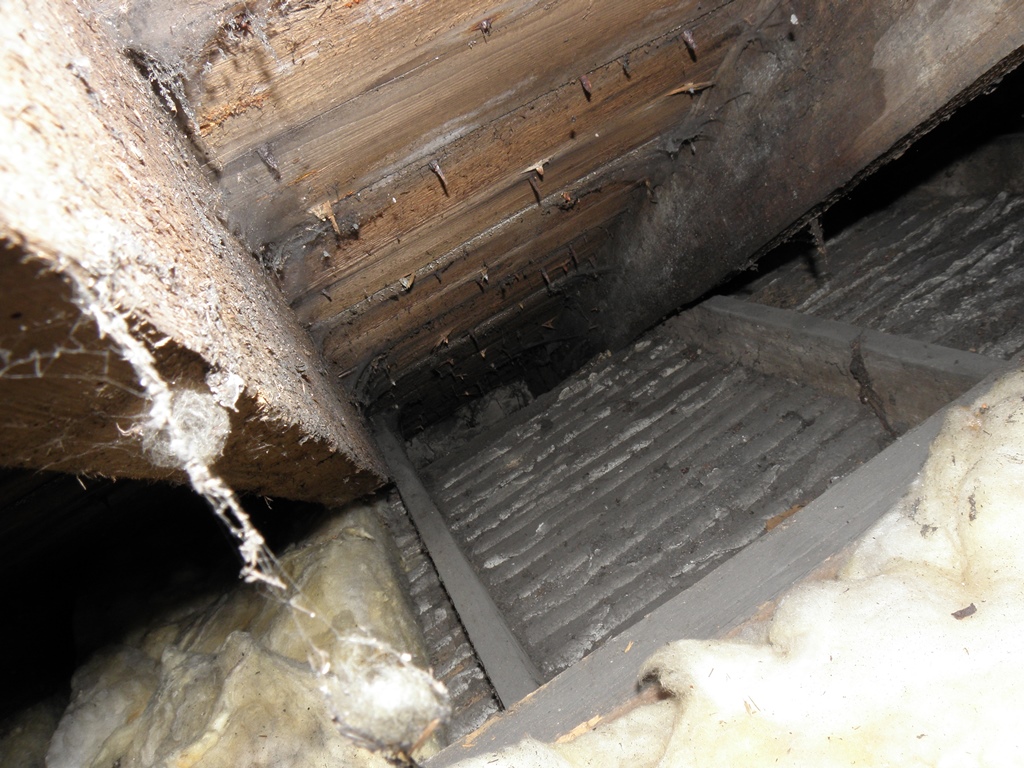
Incomplete and ineffective

Incorrect installation of insulation can have serious consequences

Ineffective insulation around downlight

Insulating the ceiling AND the underside of the roof
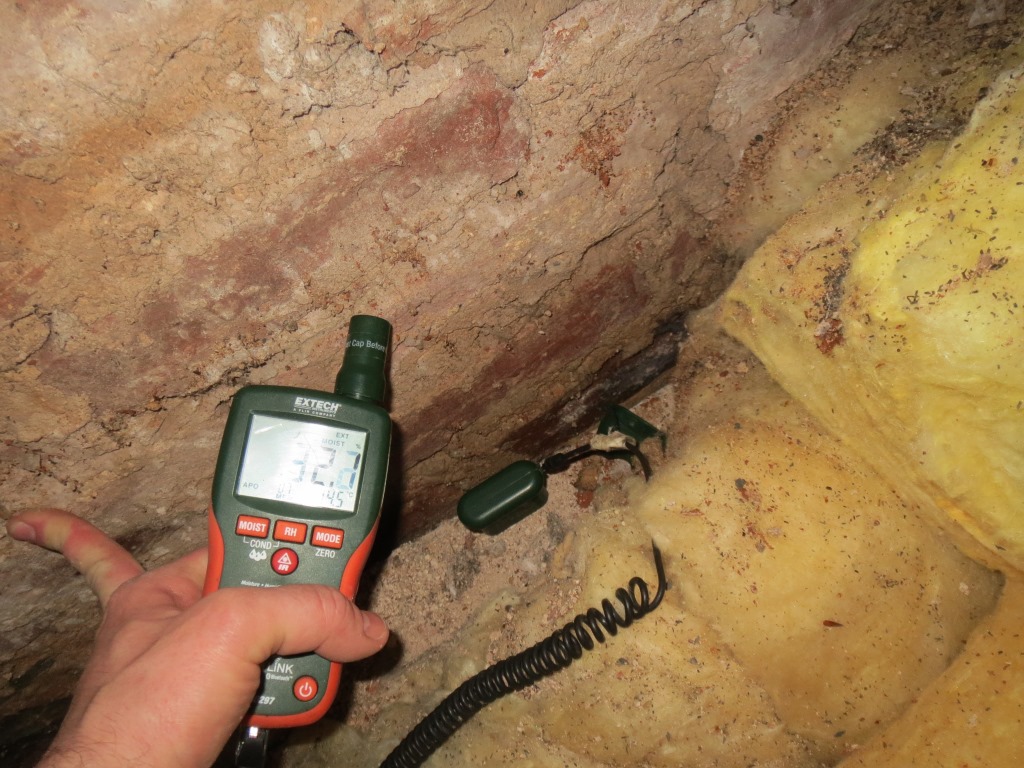
Mineral wool blocking evaporation
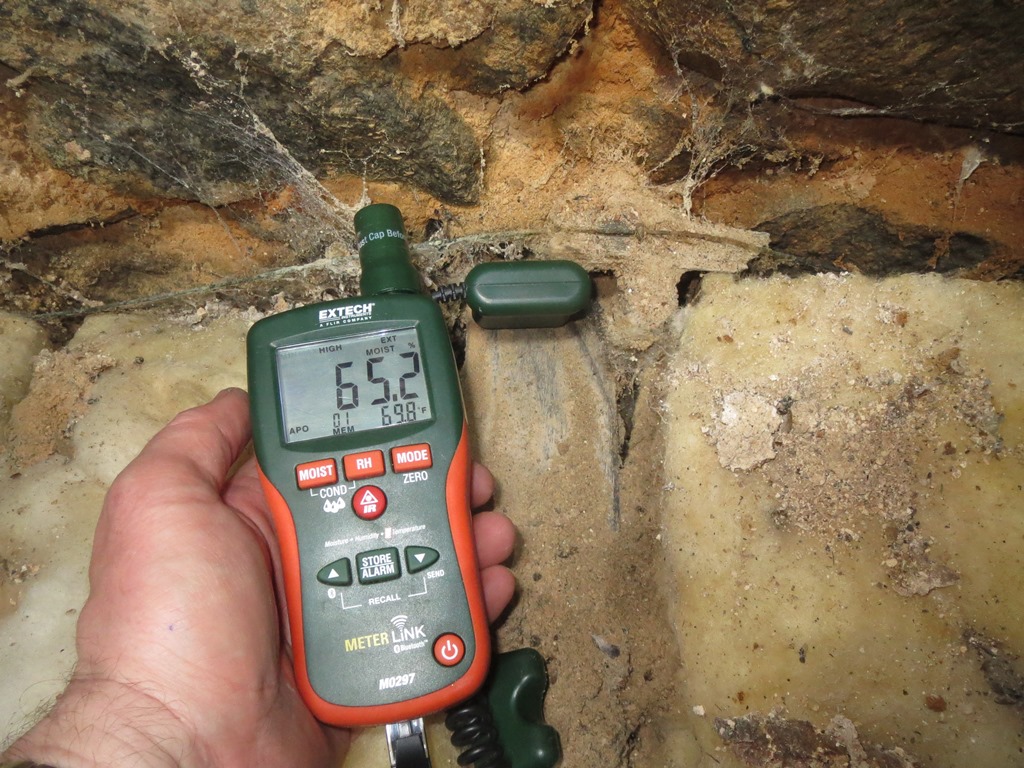
Mineral wool causing high moisture levels and decay in timbers

Mineral wool compressed and ineffective
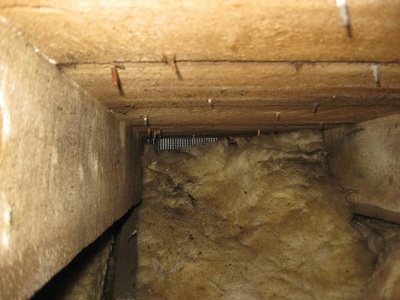
Mineral wool not sufficiently supported below floor

Moisture to sarking where mineral wool is blocking ventilation
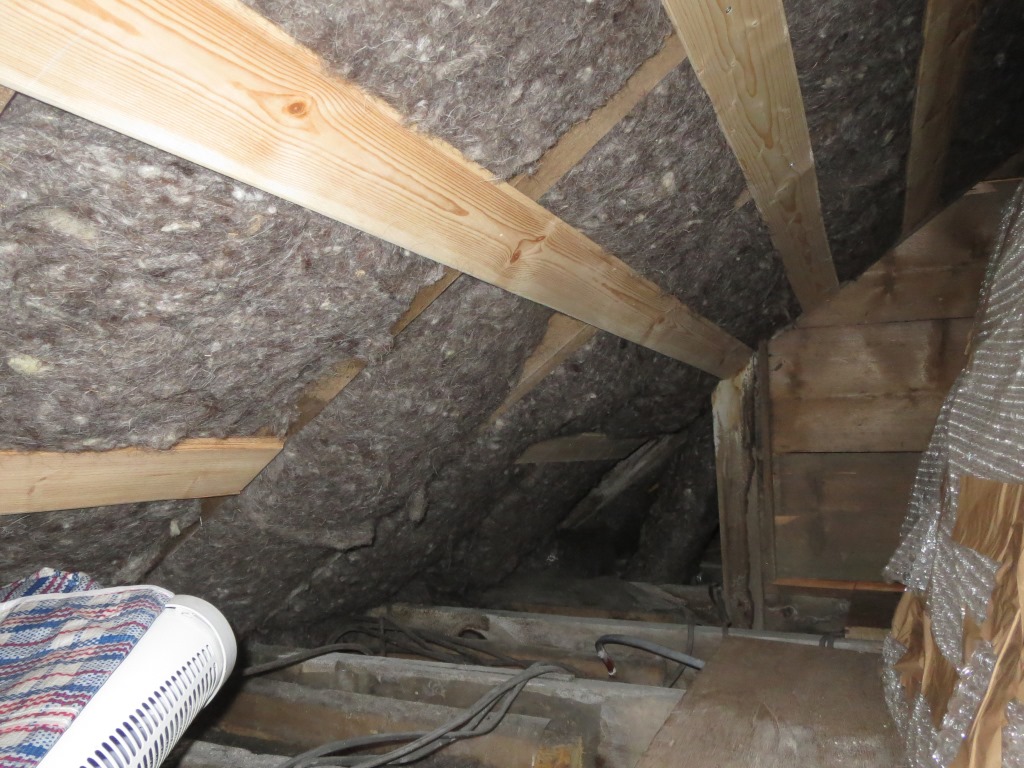
Neatly installed sheep wool but in the wrong place
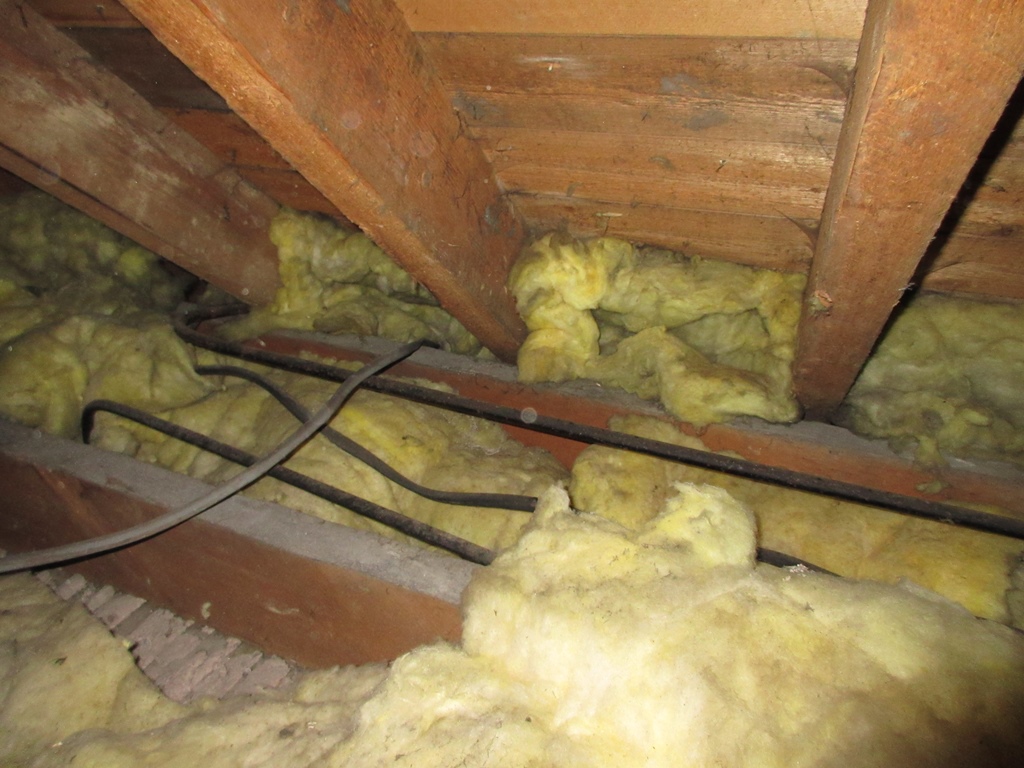
Not just blocking cross ventilation but overstuffed
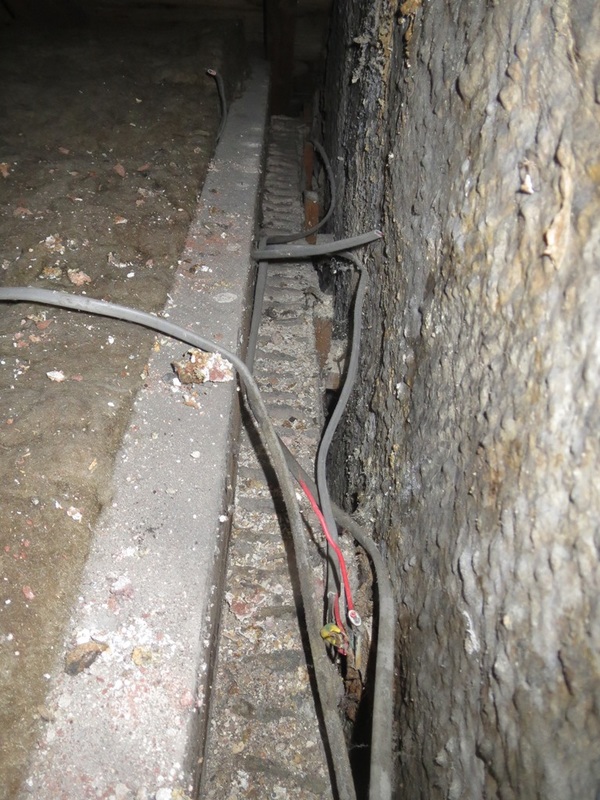
Poor cable runs
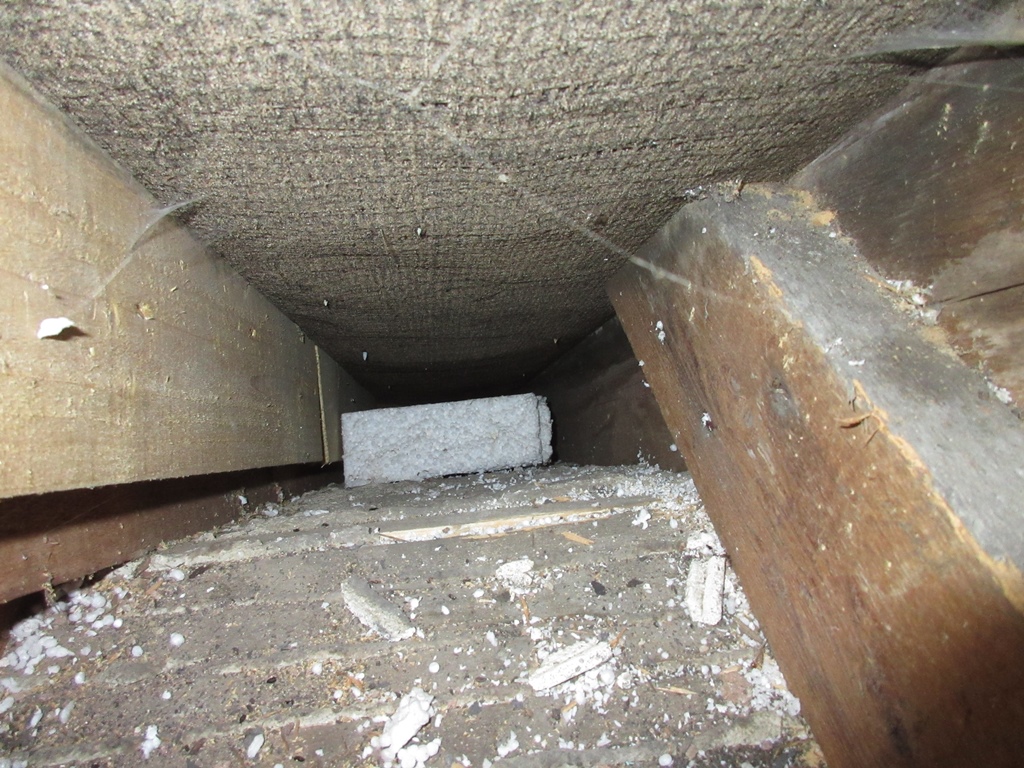
ult to insulate coombe ceilings effectively
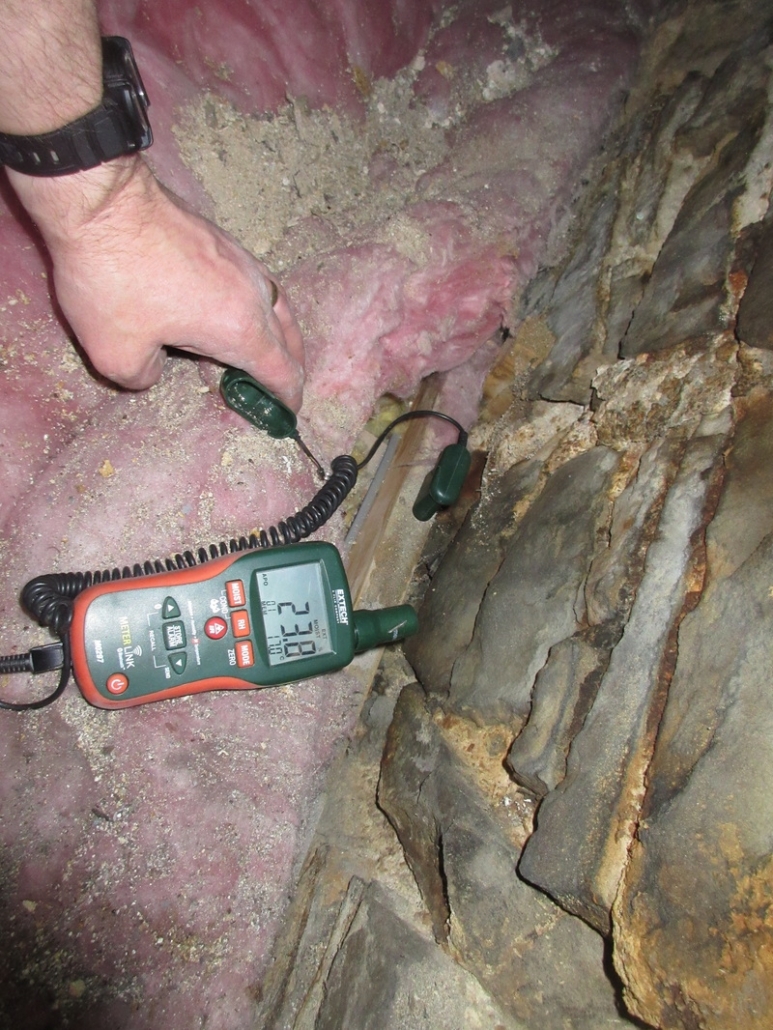
Wet gable wall and mineral wool over timber
 |
 |
 |
 |