
Specialists in Damp Solutions
There are many factors that can cause damp in your home or workplace, we believe it is important to route out the cause of the problem instead of simply patching or decorating over the man issue, this is where a property survey proves vital in identifying the problem at it’s source and removing any guess work.
Dealing With Moisture
The level of moisture, either internal or external, is one of the most important factors in a building – any building. This is more important in old buildings because the alterations we inflict on them are potentially more damaging.
Moisture can occur in many ways either from the ground (so-called rising damp – although that term is contentious), through walls (commonly called penetrating damp but again a catch-all for external faults), moisture creation internally (condensation), roofs, windows and doors, plumbing failures (defects/damage). Some of these terms are used by ‘damp specialist’ companies to scare the home owner into instructing ‘treatments’ that will supposedly ‘fix’ problems when, in fact, good old common-sense and an understanding of the building will work better and usually cost substantially less.
The way we use buildings can also change the amount of moisture that is present. For example; opening windows after a shower or bath, not drying clothes on radiators, venting clothes dryers externally, putting lids on pots and, surprise, turning the heat down under a pot – remember water boils at 100 degrees at normal atmospheric pressure – it doesn’t boil any hotter by having the heat high – so reducing fuel bills and reducing the levels of moisture in your home go hand-in-hand.
Also please note that ventilation is more important than heat when trying to dry out a damp atmosphere – the introduction of heat perversely allows the atmosphere to hold even more moisture without it condensing. If you have ever been to a hot country it can suffer from intense humidity where the atmosphere becomes saturated with moisture. A cold atmosphere cannot hold as much moisture – that’s why it rains so much in this country!
Have you thought about where the moisture which forms on your cold glass of beer or wine comes from? You have produced it. It’s in the atmosphere already just waiting for a cold surface to condense against.

This image shows a wall in an apparently damp property. It shows the level of moisture contained in the plasterboard as being saturated.
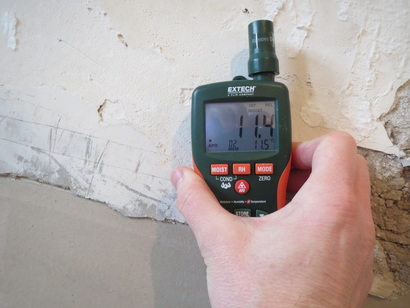
The photograph below shows the moisture contained within the the same wall about 4 inches higher on an, admittedly untidy, lath and lime plaster wall. Same atmosphere, same moisture being created.
In summary, the gypsum-based plasterboard absorbs moisture and prevents its evaporation whereas the Lime plaster promotes evaporation and deals with moisture much better.
The lesson here is don’t change materials unless you know the outcome. This property is not damp, it’s just not breathable.
Ventilation
Heat would be the natural thought when drying anything – wouldn’t it? Well, yes, if you were talking about your hands or washing but have you ever put wet clothes in a tumble dryer that isn’t vented to the outside? The moisture is merely transferred to the internal atmosphere.
So, if not heat, what? Ever thought about fresh air?
Clothes still manage to dry outside on a washing line even on a cold day. Increasing the heat in a property without introducing fresh air only allows the atmosphere to become more humid, it doesn’t ‘dry’ anything and will lead to mould growth due to condensation.
Ventilation is also necessary for healthy living, regular ‘air changes’ as required by modern building control regulations, reduce the instances of respiratory diseases (a bit off topic but you can research it yourself).
We are discussing buildings but what is good for you is also good for your home. We need fresh, clean air to breath, so does your building. Even on a cold day, the external air will still be of better ‘quality’ than the internal air, in that it will have less moisture and greater levels of oxygen in it.
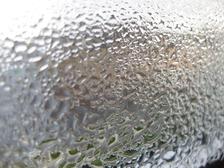
This photograph was taken in a bedroom first thing in the morning behind a timber shutter where the moisture (water vapour) produced during the night condensed (turned back into water) against the cold surface of the window.
Moisture also condenses against walls, usually external walls at low level, due to the wall being colder. It doesn’t mean your house is damp, it doesn’t mean you have rising damp, it just means that you should open a window or switch on an extractor or even just manage the production of moisture a bit better.
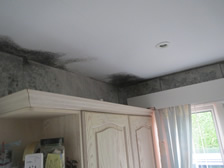
This image shows serious mould growth. The owners were very concerned about this and thought there was some serious defect. The cause? An unvented tumble dryer creating condensation on the cold external walls – despite having cavity wall insulation.
 |
 |
 |
 |