One for railway enthusiasts

Alison and I were instructed to inspect and record the last snow shed still operating in Scotland.  The Cruach Snow Shed is on Rannoch Moor and was built around 130 years ago over a cutting. The line passes through a cutting and was blocked by snow twice, a couple of years later, so the decision was taken to protect this section of the line by installing a cover.

It was built using stone and brick with curved railway sleepers (what else?) forming the roof structure, which was covered in corrugated iron sheets. It has since suffered localised failures in the structure, and the decision was made to remove it rather than repair it, the thought being that the cost of its replacement is less than the possible disruption caused by a temporary blockage.

The drone video is wonderful, a piece of art created by the contrasting colours – not by any artistic ability of its operator. Here are a few screenshots.

The tide turning for lenders reliance on damp proofers – but only by your persistance

As is common, following an RICS building survey, I was asked to carry out a timber and damp survey for my client on an old farmhouse.  This was mainly due to the MRICS surveyor stating the house had rising damp and recommending it be damp proofed by a (3-day trained) damp proofing company.  My client was knowledgeable enough to know better, moreso that the MRICS surveyor, and challenged this with our detailed report.  This the email which summarises the problems, and a happy solution:

Just a quick note to let you know that I eventually got XXXXXXXX to accepted your survey report. It initially took them 4 week to respond. The initial response from their own surveyor was that the report went into great detail however he still wanted a PCA report and all their recommendations performed. Anyway after a few calls and my flat refusal to accept their surveyors request, pointing them to numerous sources supporting the approach I’d taken along with the threat of going to another lender, they did a 180 degree turn around and approved the mortgage with zero retention within 24 hours

A good result but they are few and far between as, like most large companies and corporations, they want to limit any risk of claims so either pass on liability to a 3rd party – damp proofers – or demand abortive and unecessary work gets done because some MRICS surveyors do not understand why your building is damp.  They should understand why, they have had 3 or 4 years to learn about it at university.

Breaking through the conservation barrier

University of bath logo

I have just completed and submitted my dissertation entitled ‘Breaking through the conservation barrier’ for my MSc in ‘Conservation of Historic Buildings’.   I have named it that because I have found there is a distinct and definite barrier to the ordinary person, we who live in one of the 99.3% of old houses that aren’t protected by statutory listing.  It is difficult for us to then access the relevant information as it is ‘protected’ by these ‘conservation’ terms such as ‘heritage’, ‘historic’ or ‘listed’.  If you search on these terms, a whole new world of information open up for you.

Terraced house

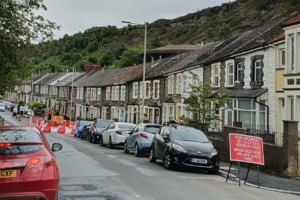
South Wales miners terraced houses

I am sure I wasn’t the most popular student to ever attend that course because I railed against the apparent elitism that prevents you from getting the right information so you are better informed about how to maintain and repair your buildings.  The information is there, just hidden and protected by these terms.  A new document written for and published by Historic England is Conserving Georgian and Victorian terraced housing is a worthy document, well written and reserached, but it is not about the terraces that most people live in, not the Welsh miner’s cottages or the industrial back-to-back terraces of Liverpool and across the Midlands, or stone terraces across Yorkshire, not even the well-to-do sandstone terraces in Glasgow.  The simple use of the word ‘Conserving’ has immediately limited its range and audience even though some of it will be useful.  This goes for most of the guidance available.

Do some research beyond the first few pages of Google, then you’ll find some interesting stuff.